Making the Case for an Enneagram Workshop
You see the potential. Here’s some help explaining it to everyone else.
Why teams use the Enneagram
Most teams don’t start by thinking, “We need the Enneagram.” They start by noticing something about the way they’re working together.
Maybe communication keeps getting lost in translation. A team has grown or changed. Different departments need to work together more effectively. Leaders want to strengthen relationships. Or the team simply wants dedicated time to better understand one another.
The Enneagram gives teams a shared language for having those conversations.
Teams often bring it in when they want to…
Strengthen communication
Understand why the same message, meeting, or feedback can land very differently from one person to another.
Build stronger working relationships
Give people a better understanding of what drives their coworkers — not just what they see on the surface.
Improve collaboration across differences
Recognize the different perspectives, priorities, and approaches people bring to decisions, projects, and everyday work.
Navigate tension more productively
Notice what happens when pressure rises, where misunderstandings can begin, and how different people tend to approach conflict.
Help a new or changing team connect
Create a shared foundation when people are joining, roles are changing, departments are coming together, or a team is entering a new season.
Develop greater self-awareness
Help individuals recognize their own patterns — including the strengths they contribute and the ways those same patterns can sometimes get in their way.
Create a shared language that lasts beyond the workshop
Give the team simple language they can return to during meetings, feedback conversations, collaboration, and day-to-day relationships.
Start with the team, not the tool.
The best question isn't “What should we cover in an Enneagram workshop?” It's “What do we want our team to understand, talk about, or do differently because of it?”
Why This Isn’t “Just Another Personality Assessment”
If your team has already used DiSC, CliftonStrengths, Myers-Briggs, or another workplace assessment, that doesn’t mean you’ve already had this conversation.
With the Enneagram, the assessment starts the conversation. It isn’t the conversation.
The real value comes from what happens next: exploring the motivations and patterns underneath how people work, hearing coworkers describe their own experiences, and applying those insights to the relationships and situations your team navigates every day.
Instead of simply asking:
“What type am I?”
the conversation becomes:
“What makes sense from my coworker’s point of view?”
“Why might we approach the same situation so differently?”
“How does my way of working land with other people?”
“What could I do differently now that I understand that?”
The goal isn’t another set of letters, numbers, or labels for everyone to remember.
It’s a shared language your team can actually use.
Already use another assessment? Great.
You don’t have to replace it. Different tools offer different lenses on how people work. The Enneagram can add another layer to the conversation, especially around the motivations, perspectives, and patterns people bring into their working relationships.
What Does an Enneagram Workshop Actually Look Like?
Think less presentation, more conversation.
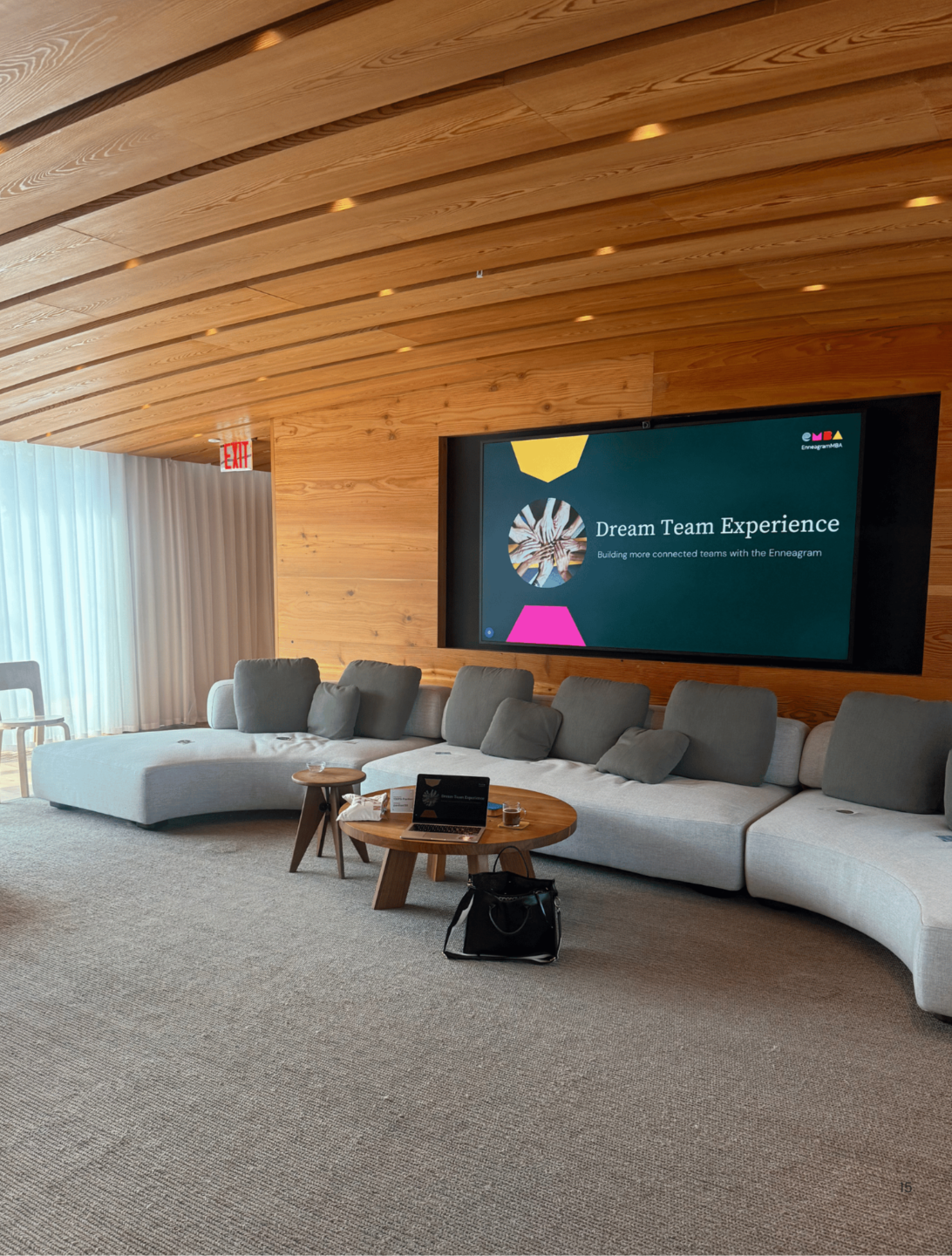
An Enneagram team experience typically blends short periods of teaching with individual reflection, small-group conversation, team discussion, and practical application.
Depending on your team’s goals and the amount of time available, the experience might include:
- Learning the nine Enneagram types and the different motivations and perspectives each can bring to work.
- Reflecting on your own patterns and recognizing how they show up in communication, relationships, leadership, or stress.
- Hearing from coworkers about how they experience work — rather than assuming everyone sees a situation the same way you do.
- Mapping the team to explore the perspectives and patterns represented across the group.
- Talking about real workplace dynamics like communication, feedback, collaboration, tension, decision-making, or change.
- Putting the insights to work by identifying practical ways to communicate and work together differently.
It’s interactive, but it isn’t forced vulnerability.
People are invited to participate, reflect, and learn from one another without being required to share anything they’d rather keep private.
Want to see exactly how the time could come together?
Explore our 2-Hour + Half-Day Sample Enneagram Workshop Agendas
What Does It Require From the Team?
Not as much as you might think.
We’ll help guide the planning so your team can focus on participating in the experience rather than figuring out how to create it.
Typically, your team will need to:
- Choose the goal and timing. Decide what you’d like the experience to support and how much time you have together.
- Complete the pre-work. Participants may complete an Enneagram assessment and brief reflection or survey before the session.
- Show up ready to participate. The experience includes conversation and reflection, but no one is expected to be an Enneagram expert — or become one.
- Provide the basics. For an onsite experience, that usually means a comfortable meeting space, screen or projector, and room for people to talk together.
- Make a little room afterward. The teams that get the most from the experience find simple ways to bring the language back into everyday work.
You don’t need to figure it all out yourself.
From sample agendas and participant communication to room setup and follow-up, we’ve created resources to make planning the experience easier.
Your job is to know your team.
We’ll help with the Enneagram part.
Ways to Bring It In
From a single team experience to development across an organization, there’s more than one way to get started.

DIY Workshop
Use our ready-to-facilitate workshop kit with a professionally designed presentation, facilitator notes, activities, handouts, and participant resources.
2-Hour Introduction
A focused introduction to the nine types and a shared language your team can start using right away.

Half-Day Experience
More time for conversation, team mapping, and applying the Enneagram to how your team works together.

Full-Day Experience
More room to explore additional topics and spend meaningful time applying the insights to your team.

Team Development Program
Extend the learning beyond one workshop with follow-up experiences designed to help the shared language stick.

Across the Organization
Bring a shared language across multiple teams, departments, locations, or leadership levels.
Ready to Share the Idea?
You don’t have to become the Enneagram expert before bringing the idea to your team. Here are a couple of easy ways to start the conversation.
Copy + Paste This to Your Boss
I’d like to explore bringing an Enneagram workshop to our team. The Enneagram gives teams a shared language for understanding the different perspectives and patterns people bring to work, and the experience can be tailored around areas like communication, collaboration, and team relationships.
Enneagram MBA offers everything from introductory workshops to longer team development experiences, so we could choose something that fits our goals and available time. I thought it could be especially useful for us as we think about [TEAM GOAL / CHALLENGE].
Here’s an example of what an experience could look like: Sample Agenda Link


Have Questions Before You Share It?
Wondering how the Enneagram differs from DiSC, whether people have to share their type, what happens if an assessment gets it wrong, or what actually happens during a workshop?
-> Explore the Enneagram at Work FAQ
-> See the 2-Hour + Half-Day Sample Agendas
-> Still planning? Return to the Team Experience Planning Kit
Or reach out to enneagrammba.com/contact with specific questions.
Pictured: Sarah Wallace, Founder/Lead Facilitator, Enneagram MBA