Sample Enneagram Workshop Agendas for Teams: 2-Hour + Half-Day
What Could an Enneagram Experience Look Like for Your Team?
No two teams are exactly alike, and their Enneagram experiences shouldn’t be either.
The examples below offer a starting point for imagining what you can accomplish in a 2-hour introductory experience or a more interactive half-day workshop.
The exact agenda can shift based on your team’s goals, previous Enneagram experience, group size and the conversations that would be most useful right now.
Option 1: The 2-Hour Introduction
Best for:
Teams looking for an engaging introduction to the Enneagram and a shared language they can begin using right away.
Before the Workshop
Pre-Workshop Assessment + Reflection
Participants complete an Enneagram assessment before the session and receive their results in advance.
A short pre-workshop survey can also help identify the team’s current strengths, challenges and opportunities — giving the facilitator context for the experience.
During the Workshop
Welcome + Why the Enneagram at Work
10 minutes
Set the stage for the experience, introduce the Enneagram as a workplace tool and explore why people can experience the exact same meeting, conversation or situation very differently.
Meet the 9 Types
45 minutes
An engaging introduction to the nine Enneagram types, with an emphasis on the different motivations, perspectives and patterns each can bring to work.
Rather than simply memorizing nine personality descriptions, participants begin asking:
What makes sense from this person's point of view?
Type Reflection + Small-Group Conversation
20 minutes
Participants have an opportunity to reflect on their own results and connect with others through guided discussion.
This is often where the Enneagram begins moving from something people are learning about to something they're recognizing in themselves and one another.
Map the Team
20 minutes
See the team through an Enneagram lens.
Where are different perspectives represented? Where might the team naturally have similarities? What viewpoints may be less represented?
The goal isn't to create a “good” team map. It's to become more aware of the perspectives already in the room.
Put It to Work
20 minutes
Bring the conversation back to everyday work through guided questions around communication, collaboration and working relationships.
Participants identify one practical insight they can begin using immediately.
Wrap-Up + What's Next
5 minutes
Capture key takeaways and identify ways the team can keep the shared language going after the workshop.
A Note About Timing
More time doesn't simply mean more Enneagram content. It means more time for application.
A 2-hour session can create a strong shared foundation and introduce the nine perspectives.
A half-day gives the team more room to talk with one another, explore its own patterns and apply the framework to real working relationships.
For teams looking for deeper development, a full-day experience or ongoing development program can build on this foundation with additional topics such as growth, conflict, leadership, stress and Instinctual Biases.
Option 2: The Half-Day Experience
Best for:
Teams that want to move beyond an introduction and spend more time applying the Enneagram to how they communicate, collaborate and work together.
Typical length: 3.5–4 hours
Before the Workshop
Pre-Workshop Assessment + Team Survey
Participants complete an Enneagram assessment in advance.
A pre-workshop survey can gather insight into current team dynamics, communication, collaboration and the situations the group would most benefit from exploring.
Those insights help shape the session around the actual team in the room.
During the Workshop
Welcome + Setting the Stage
15 minutes
Connect the experience to the team's goals and introduce a central idea:
We don't all experience work the same way.
The Enneagram gives us a language for understanding some of those differences.
Meet the 9 Types
50 minutes
Explore the nine Enneagram types through a workplace lens, including the motivations, strengths, perspectives and patterns that can influence how each approaches work and relationships.
Participants are encouraged to look beyond behavior and become curious about the logic underneath it.
Type Reflection + Breakout Conversations
30 minutes
Participants reflect on their own patterns and talk with colleagues through guided questions.
These conversations allow people to hear directly from one another rather than relying on assumptions about what a particular type thinks, needs or intends.
Break
10–15 minutes
Your Team Through the Enneagram
30 minutes
Explore the team's Enneagram map together.
Consider:
Where do we have similarities?
Where do we bring very different perspectives?
What strengths might those differences create?
Where could they contribute to misunderstanding or friction?
Lost in Translation: Communication + Collaboration
40 minutes
Move from understanding types to understanding one another.
Explore how different people may interpret communication, feedback, urgency, questions, decisions and interactions differently, and what can get lost in translation as a result.
The team begins identifying ways to translate across those differences rather than expecting everyone to communicate or work the same way.
Put It to Work: Team Conversation
30 minutes
Use guided discussion questions to apply what the team has learned to its actual working relationships.
Depending on the team's goals, conversation might focus on communication, collaboration, feedback, conflict, leadership or a current team challenge.
From Insight to Action
20 minutes
Participants identify practical ways they want to work differently because of what they've learned.
The team can also begin identifying shared language, reminders or practices they want to carry forward.
Wrap-Up + Keep the Shared Language Going
10 minutes
Capture key insights and discuss how the Enneagram can continue showing up in everyday work rather than becoming “that workshop we did once.”
© 2026 Enneagram MBA, LLC. All rights reserved. Provided for personal and internal organizational planning purposes only. This material may not be reproduced, sold, republished, or used to facilitate commercial Enneagram training without written permission.
Not Sure Which Format Fits?
Start with the outcome rather than the number of hours. Ask:
What do we want people to understand differently?
What do we want them to talk about together?
What do we hope they do differently when they return to work?
Those answers can help determine whether your team needs a focused introduction, a more interactive half-day, or a longer development experience.
Ready to Bring It to Your Team?
There’s more than one way to create a meaningful Enneagram experience. Choose the level of support that works best for your team.
Lead It Yourself
DIY ENNEAGRAM WORKSHOP KIT
Already have someone internally who is comfortable facilitating?
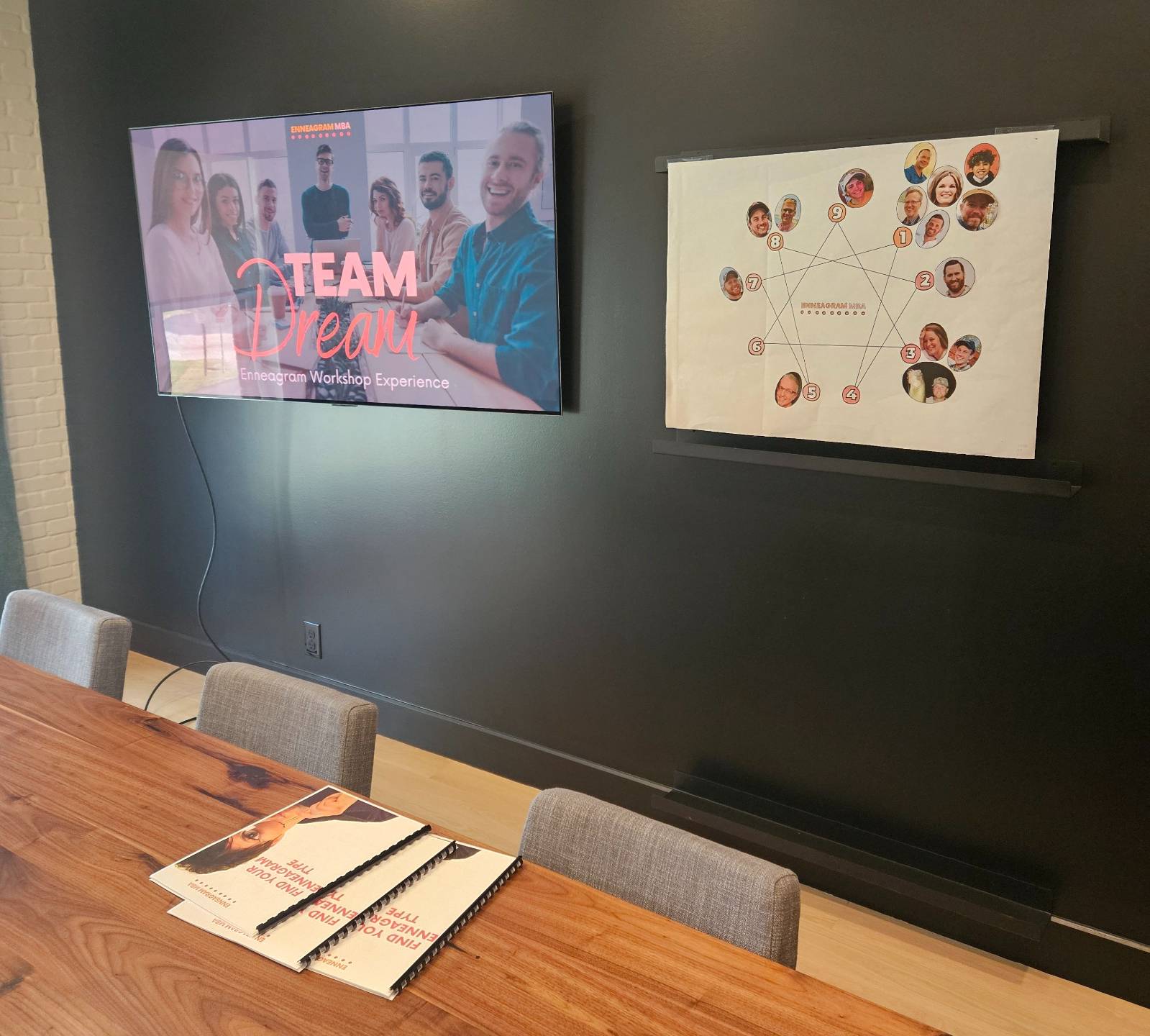
Our DIY Workshop Kit gives you the professionally designed materials to lead an engaging 2-hour Enneagram workshop with your own team, including the presentation, facilitator notes, activities, handouts and participant resources.

Bring In a Facilitator
ENNEGRAM MBA TEAM EXPERIENCES
Want someone else to design and lead the experience?
We facilitate customized Enneagram workshops and development programs for teams, leadership groups and organizations — from a single team session to experiences that extend across departments and locations.
Not sure which route makes sense?
Start with what you want your team to walk away with, and how much you want to own the planning and facilitation.
Want the complete Team Experience Planning Kit?
Explore our complimentary Team Experience Planning Kit for sample agendas, planning checklists, discussion questions, room setup ideas and more.
GET ACCESS