
Over 6,000 People Took Our Enneagram Quiz. Here's What We Found.
Oct 16, 2026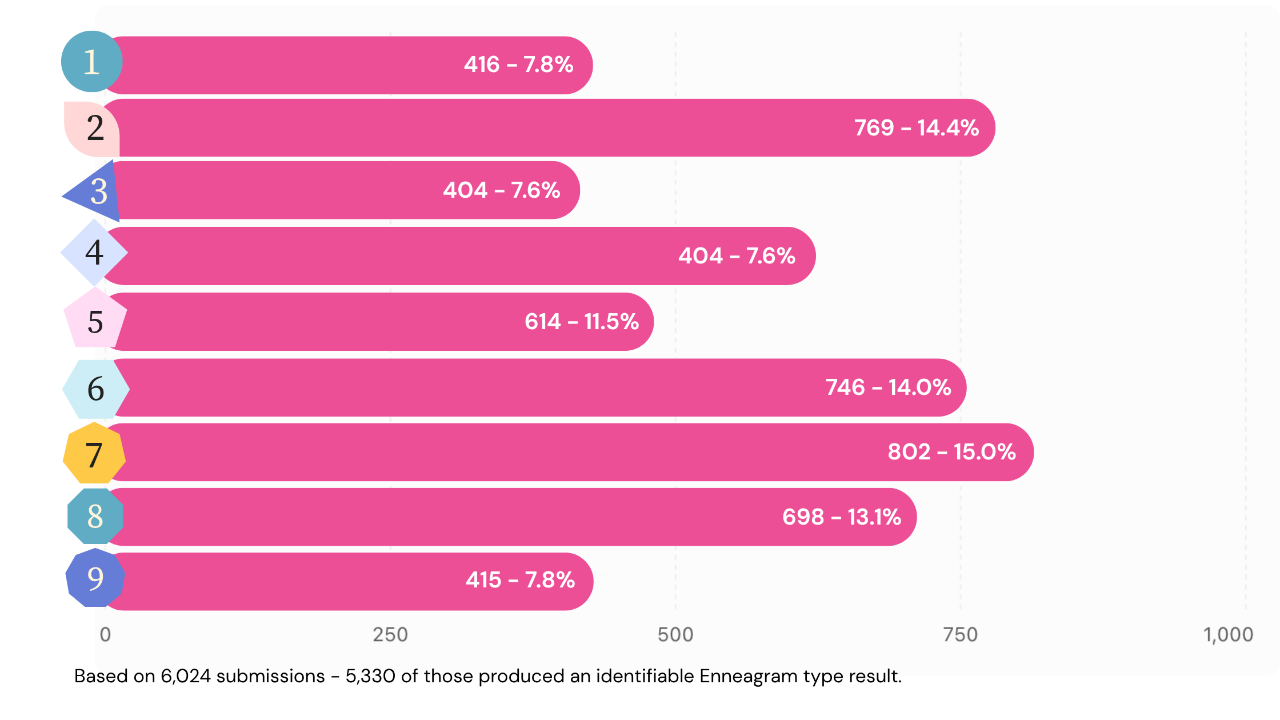
Which Enneagram types show up most often? And what can a two-question quiz really tell us about ourselves?
What started as a simple interactive activity for our exhibit at the Association for Talent Development conference in May 2025 has since grown into one of our most popular online resources, with more than 6,000 quiz submissions and counting.
Naturally, I was curious. Which types appeared most frequently? Were some significantly more common than others?
Here's what we found.
The Most Common Enneagram Types in Our Quiz
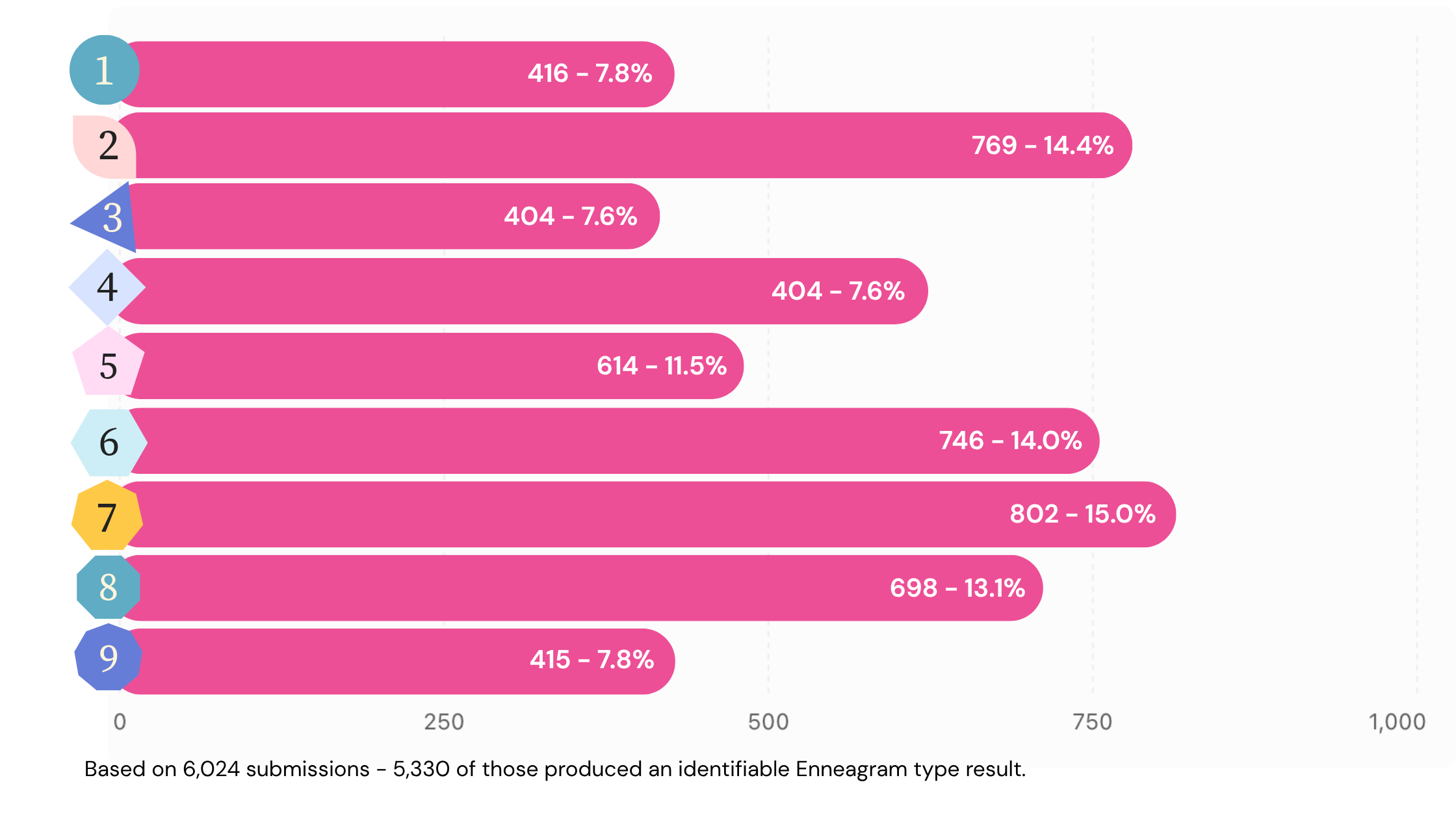
Of the 6,024 submissions, 5,330 produced an identifiable Enneagram type result.
The three most frequent results were:
-
Type 7 – The Enthusiast: 802 people (15.0%)
-
Type 2 – The Helper: 769 people (14.4%)
-
Type 6 – The Loyalist: 746 people (14.0%)
Type 8 followed closely behind, with 698 results (13.1%).
At the other end, Type 3 appeared least frequently, with 404 results (7.6%).
Does this mean Sevens are the most common Enneagram type? Or that Threes are particularly rare?
Not necessarily.
And that's where things get interesting.
What These Results Tell Us (and What They Don't)
First, this isn't a scientific study of the general population. These are results from people who found our website and chose to take a short Enneagram quiz.
Second, the quiz asks just two questions.
That's what makes it so accessible, but it's also an important limitation.
The Enneagram isn't simply about how you behave. It's about the motivations, assumptions, and internal strategies driving your behavior.
Two people might both describe themselves as hardworking, helpful, or independent but be operating from entirely different motivations.
And depending on how we see ourselves, or even what's happening in our lives when we take an assessment, we might select answers that don't fully capture those deeper patterns.
This is one reason I encourage people to approach Enneagram assessments with curiosity rather than certainty.
Your Test Result Is a Starting Point, Not a Final Answer
One of the most common questions I hear is, "What if I relate to more than one type?"
My typical response? That's completely normal!
We all have access to behaviors and characteristics associated with all nine types. The work is understanding why we tend to think, feel, and respond the way we do.
A test can point you in a direction. But learning about the underlying motivations, exploring your instincts, and reflecting on patterns over time can offer a much fuller picture.
And that's where the Enneagram becomes particularly valuable at work.
It's not just about identifying your type. It's about recognizing how your patterns influence communication, decision-making, conflict, and relationships with other people.
So, What's Your Enneagram Type?
If you're curious, you can take our free 2-question Enneagram test.
Consider your result an invitation to explore rather than a label to adopt.
And if you'd like to go deeper, our 1:1 Enneagram Typing Sessions offer a personalized opportunity to explore your core motivations, gain clarity about your type, and understand how your patterns show up at work.
Because the real value of the Enneagram isn't simply knowing your number.
It's knowing what to do with that awareness.
https://www.enneagrammba.com/enneagram-coaching
Looking for an Enneagram facilitator for your team?
If you're considering bringing the Enneagram into your workplace, start by telling us a little about what's going on with your team. We'll help you think through what kind of experience might make the most sense, whether that's a standalone workshop, continued team development, or something across multiple teams or departments.