
Enneagram Soul Child Theory: How to Use It at Work
Apr 15, 2026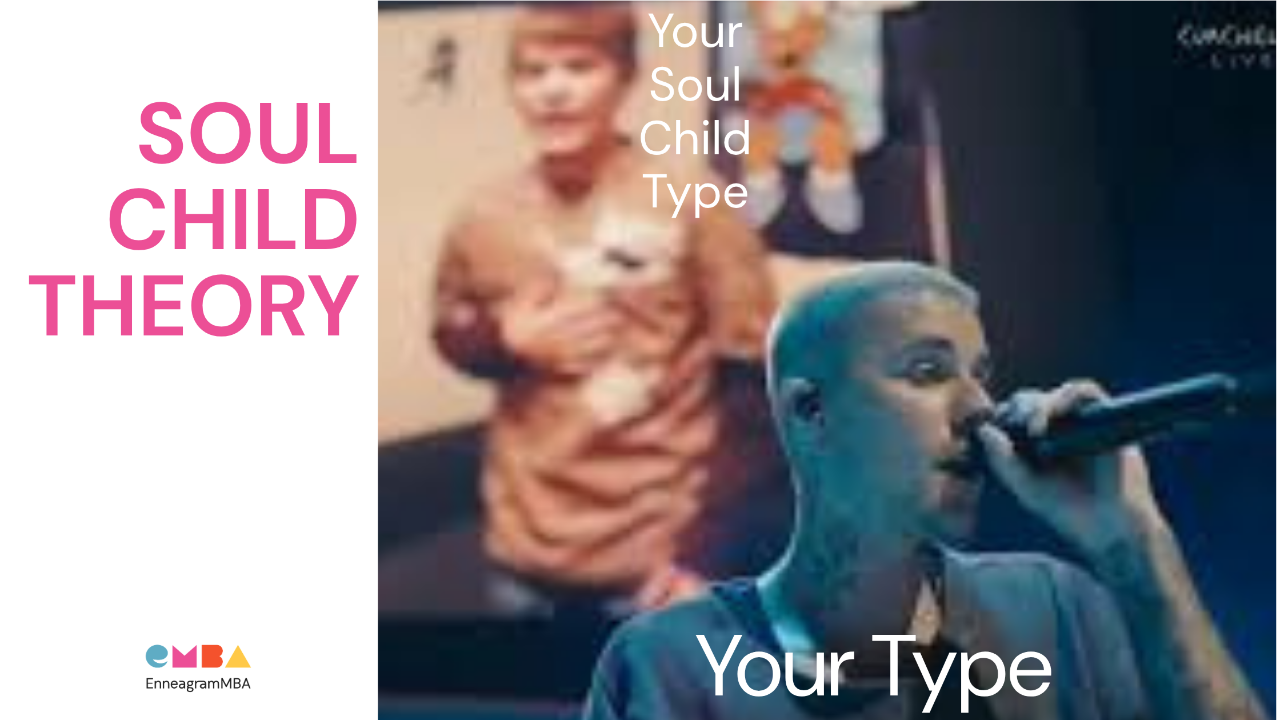
At the 2026 Coachella Music Festival, Justin Bieber didn't bring fireworks or backup dancers. He brought his younger self.
In some Enneagram frameworks, this is known as your Soul Child, the version of you that existed before life taught you it wasn't okay to be that way.
It's the type at your growth point, and according to Enneagram author Sandra Maitri, our personality actually developed around suppressing it.
When I shared this over on LinkedIn, author and Enneagram specialist Jonn Harper, clarified further in a comment:
In a leadership or team context, this opens up a different kind of reflection. Instead of just asking, “How do I grow?” it invites, “What might my current way of operating be compensating for?”
As you find your type below, reflect on less about your childhood and more about the essential quality that didn’t fully find support early on, and the personality develops around that.
Type 1 - Soul Child Type 4
Type 1s are principled, precise, and highly aware of what could be better. But according to Soul Child Theory, they have an inner Type 7 who wanted to be spontaneous, joyful, and free from the pressure of getting everything right all the time.
Most 1s learned early that play was irresponsible. That fun had to be earned. That there was always something to fix before you could relax.
In leadership and team dynamics, this shows up as the 1 who can't celebrate a win before spotting what went wrong, who holds themselves (and others) to standards that can exhaust everyone, including them.
Healing for a 1 isn't just about being reckless, but rather about letting that inner Type 7 kid remind them that joy isn't a reward. It's a necessary part of life.
Type 2 - Soul Child Type 4
Type 2s tend to be the connectors on their teams, with their relationship-oriented generosity and awareness of what everyone else needs. But their Soul Child is a Type 4 who was deep, creative, and really wanting to be known for who they are, not just what they do for others.
According to Soul Child Theory, 2s learned early that having needs felt like a burden. That being loved meant being helpful first.
In leadership and team dynamics, this shows up as the 2 who rarely asks for what they need, who gives until they're empty, and then quietly resents that no one noticed.
Healing for a 2 isn't only about setting boundaries, but rather letting that inner Type 4 kid finally ask, but what about me?
Type 3 - Soul Child Type 6
Type 3s have a reputation for being high performers on teams, with their drive, polished presence, and success-is-the-only-option mindset.
But their Soul Child is a Type 6 who tends to be the guardians of the team, cautious, and longing for a place where they're cared about without having to perform for it.
Most 3s learned early that love was conditional. That achievement was the ticket. That slowing down and rest felt dangerous.
In leadership and team dynamics, this shows up as the 3 who can't stop moving, who measures their worth in outcomes, and who doesn’t have a good grasp on what they actually feel underneath the hustle.
Healing for a 3 isn't just to slow down, but rather about letting that inner Type 6 kid finally trust that they're enough, even when they're not “on”.
Type 4 - Soul Child Type 1
Type 4s tend to bring depth and original thinking to their teams, with their intuition, capacity for feelings, and willingness to name what everyone else might be tiptoeing around. But their Soul Child is a Type 1 who is structured, logical, and a believer that hard work and effort matter.
Most 4s learned early that they were somehow different in a way that felt more like a struggle than a gift. That longing for meaning left them circling their own potential without bringing it to fruition.
In leadership and team dynamics, this shows up as the 4 who has brilliant, one-of-a-kind ideas that never quite get finished, who feels things deeply but can struggle to turn that into consistent action and results.
Healing for a 4 isn't only about self-expression, but also about letting that inner Type 1 kid show up with a plan, and trusting that discipline and routine won’t kill the magic.
Type 5 - Soul Child Type 8
Type 5s tend to be observers and deep thinkers on their teams, showing up as their analytical, self-controlled, and knowledgeable selves. But their Soul Child is a Type 8 whose energy tends to be bold, direct, and built to take up space without apologizing for it.
Most 5s learned early that the world was overwhelming and resources were limited, and that the safest thing to do was to withdraw, watch from afar, and need as little as possible.
Healing for a 5 isn't only about sharing more, but also reminding that inner Type 8 kid that they were never too much, and the world isn't either. They are meant to be fully in it, not on the edges.
Type 6 - Soul Child Type 9
Type 6s tend to be guardians of the team cohesion with their dependability, preparedness, and thinking that’s always three steps ahead about what could go wrong. But their Soul Child is a Type 9, who tends to be more peaceful, present, and trusting that things are going to be okay.
Most 6s learned early that the world wasn't safe enough to relax in. That hypervigilance was a form of love. That preparing for the worst was the most responsible thing they could do.
In leadership and team dynamics, this shows up as the 6 who thinks through every scenario, second-guesses the plan, and carries a level of worry that the rest of the team doesn't even know about.
Healing for a 6 isn't only about managing anxiety, but also letting that inner Type 9 kid breathe out and remembering what it felt like to just be without bracing for impact.
In leadership and team dynamics, this shows up as the 5 who has the most valuable perspective in the room but shares it quietly... or not at all.
Type 7 - Soul Child Type 5
Type 7s are known for their to ability to energize and excite their team, being visionary, enthusiastic, and capable of making any room feel like the most fun place to be. But their Soul Child is a Type 5 who’s more quiet, curious, and craving the kind of deep understanding that can't be found by moving fast.
Most 7s learned early that pain was something to outrun. That staying busy was safer than sitting still. That the next idea, trip, or adventure would finally be the one that satisfied that insatiable need for excitement.
In leadership and team dynamics, this shows up as the 7 who has endless ideas but struggles to go deep on any of them, onto the next thing before the current thing is finished.
Healing for a 7 isn't simply about slowing down, but also letting that inner Type 5 kid get genuinely consumed in something and discovering that going deep can feel just as exciting as going wide.
Type 8 - Soul Child Type 2
Type 8s are the powerful protectors of their team, bringing their decisiveness, directness, and being the first ones to fight for the people they care about. But their Soul Child is a Type 2, who tends to be the empathetic, rapport-builders, with a desire to connect without their guard up.
Most 8s learned early that vulnerability got you hurt. That opening up was a liability. That the only way to stay safe was to be the strongest person in the room.
In leadership and team dynamics, this shows up as the 8 who leads with intensity, earns respect, but rarely lets anyone close enough to see the person behind the power.
Healing for an 8 isn't only about being more open, but also about letting that inner Type 2 kid back in who just wanted to care for people and be cared about back, even when they’re not feeling strong.
Type 9 - Soul Child Type 3
Type 9s tend to be the peacekeepers on their teams, with their steady, inclusive, go-with-the-flow energy. But their Soul Child is Type 3, who’s striving to feel outstanding, the one who wants recognition, who wants to stand out.
Most 9s learned early that wanting the spotlight felt selfish. So they stopped wanting it out loud.
In leadership and team dynamics, this shows up as the 9 who never advocates for themselves, deflect praise with self-deprecation, or underestimate their own influence and impact.
Healing for a 9 isn't only about speaking up, but also about letting that inner Type 3 kid have the spotlight and recognize their power to be incredibly influential.
---> Interested in learning more about your own growth path possibilities through the lens of soul child theory aka what your current way of operating might be compensating for?
Book a 1:1 Enneagram for Leaders session to confirm your leadership type and discuss ways to apply it in the workplace with Enneagram MBA Leadership Coach, Brenda Brown, PCC.
Source: The Spiritual Dimension of The Enneagram: Nine Faces of The Soul” by Sandra Maitri.
Looking for an Enneagram facilitator for your team?
If you're considering bringing the Enneagram into your workplace, start by telling us a little about what's going on with your team. We'll help you think through what kind of experience might make the most sense, whether that's a standalone workshop, continued team development, or something across multiple teams or departments.