
How to Make the Enneagram Stick After a Team Workshop
Sep 12, 2026
A great Enneagram workshop can create a lot of energy in the room.
People recognize themselves in a type description. Coworkers laugh about the differences they suddenly understand. A manager finally has language for a dynamic they’ve been noticing for months. Someone leaves thinking, Okay, this explains a lot.
And then everyone goes back to work.
The meetings start again. Deadlines take over. New projects launch. Someone leaves the team. Someone new joins. And six months later, the Enneagram can easily become “that really interesting workshop we did last year.”
So how do you keep the Enneagram alive after a team workshop?
The goal isn’t necessarily to keep everyone talking about the Enneagram all the time. It’s to help the team turn what they learned into a shared language they can continue using to understand and navigate how they work together.
That takes more than learning your type.
Why a Great Enneagram Workshop Is Only the Beginning
There is absolutely a place for a standalone Enneagram workshop.
For a company retreat, conference, leadership offsite, team-building event, or a team getting its first introduction to the Enneagram, a single experience can be meaningful on its own.
But if the goal is to improve communication, strengthen leadership, navigate conflict or help departments work better together, learning the Enneagram is usually only the beginning.
Think about it like working with a personal trainer.
You could spend a few hours learning the exercises, understanding proper form and creating a plan. That session could be incredibly valuable.
But if you want lasting results, eventually you have to take what you learned and use it.
You practice. You adjust. You encounter situations you didn't anticipate. You ask new questions. You figure out what works for you.
Team development isn't much different.
Knowing that one coworker is a Type 6 and another is a Type 8 can be interesting. Understanding why they may approach a decision differently, and what they can do with that information, is where the Enneagram starts becoming useful.
That distinction is what led us to develop what we call the Enneagram MBA Shared Language Method.
What Does “Shared Language” Actually Mean on a Team?
We use the phrase shared language a lot at Enneagram MBA, but it doesn't mean everyone memorizes the nine Enneagram types.
A shared language starts to develop when people can recognize what may be happening underneath their differences and have a way to talk about it.
It might sound like:
“I think we're hearing this differently.”
“Here's what I need before I'm ready to move forward.”
“I know what I intended, but I can see how that landed differently.”
Or:
“I think we're approaching this from two different places. Let's figure out what's important to each of us before we keep going.”
That's a much different outcome than simply being able to identify everyone's Enneagram number.
The Enneagram gives us a framework for understanding patterns. Translation is the bridge between that framework and the actual people sitting around your conference table.
The Enneagram MBA Shared Language Framework
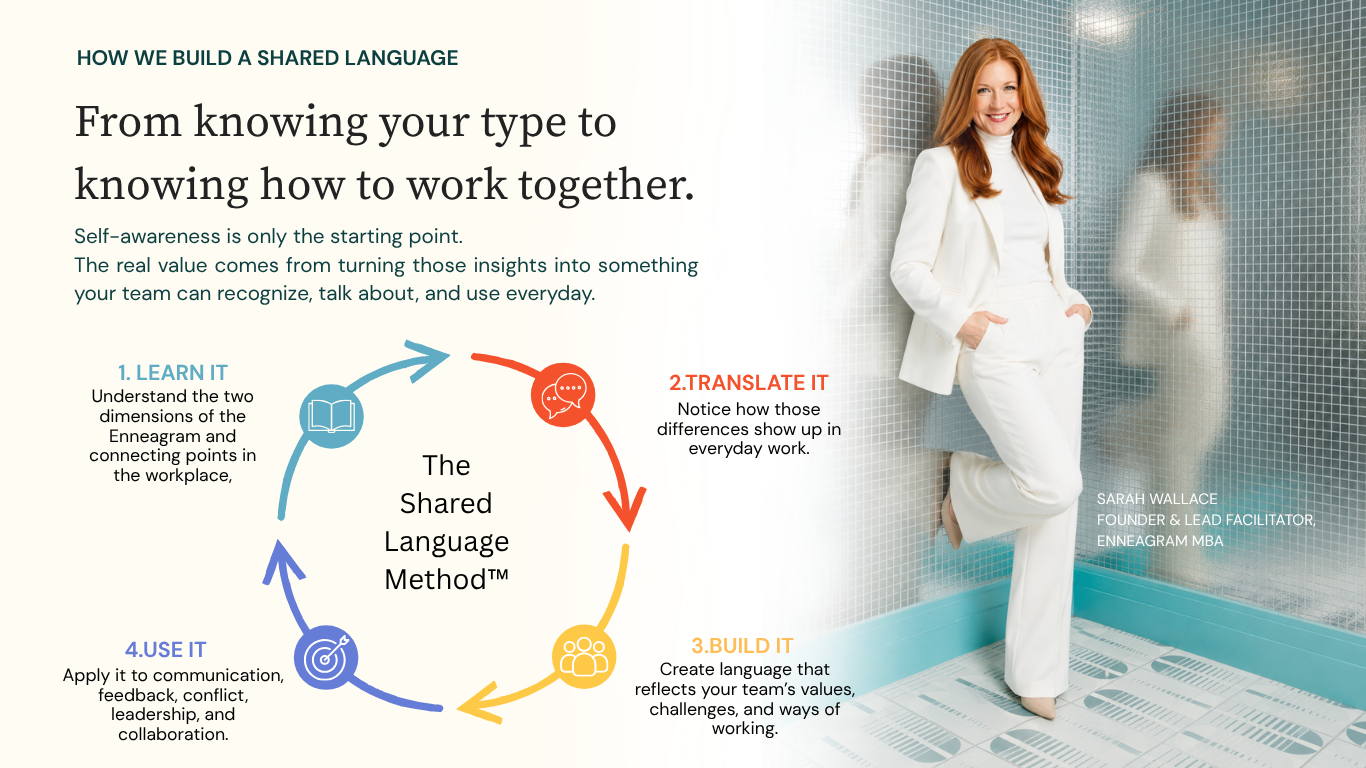
We think about that process in four parts:
1. Learn It
First, you need some common vocabulary.
This is where a team learns the foundations of the Enneagram: the nine types, the motivations and strategies underneath them, individual patterns, Instinctual Biases and other relevant parts of the system.
Team members begin recognizing their own patterns and understanding why someone else may approach the exact same situation very differently.
That foundational knowledge matters.
But it isn't the finish line.
2. Translate It
Next, take the Enneagram out of theory and translate it into your particular team.
How do we communicate?
Where do we tend to misunderstand one another?
What happens when we disagree?
How do the individual patterns on this team affect our meetings, decisions, feedback, leadership or response to change?
Knowing you're a Type 6 and your teammate is a Type 8 isn't particularly useful on its own.
The value comes when you can translate that information into:
Here's why we might approach this differently. And here's what each of us can do about it.
This is also where a team map can become more than an interesting visual. Instead of simply looking at which types are represented, the team can begin exploring what those patterns might mean for the way this particular group works together.
3. Build It
Once a team understands its differences and what those differences mean for working together, the next question becomes:
What are we going to do differently because of what we've learned?
This is where awareness starts turning into shared practices.
Maybe your team recognizes that some people need time to process information before making decisions, while others prefer to think out loud and move quickly.
What could you build into your meeting structure to accommodate both?
Maybe you've discovered that different departments have very different expectations around communication, deadlines, or accountability.
What agreements could help everyone work together more effectively?
Building a shared language doesn't mean everyone needs to work the same way. It means creating practices that help people work better with those differences.
That might look like establishing team communication agreements, adjusting how feedback is delivered, creating clearer decision-making processes, or developing a shared approach to navigating conflict.
Instead of simply saying, "Now we understand each other better," the team can begin saying, "Here's how we're going to work together differently."
4. Use It
Of course, creating new practices is one thing. Actually using them when work gets busy, deadlines get tight, or tensions rise is another.
That's where the shared language really starts to stick.
Bring it into your next meeting.
Use it when you're navigating a difficult conversation.
Revisit your team agreements when a project starts to derail.
Refer to your team map when you're thinking through a leadership decision, onboarding a new employee, or trying to improve collaboration between departments.
And importantly, using the Enneagram doesn't require everyone to start speaking in Enneagram jargon.
The goal isn't:
"Well, you're a Type 8, so of course you're doing that."
It's developing the awareness to ask better questions:
What am I bringing into this conversation?
What might you need that I don't?
What are we each paying attention to?
Where might something be getting lost in translation?
And using those insights to adjust how you work together.
As teams grow, people change roles, and new challenges emerge, those shared practices may need to evolve, too.
Keeping the Enneagram alive doesn't have to mean another four-hour workshop every few months. It might mean revisiting the team map during a quarterly meeting, incorporating a discussion prompt into a manager check-in, or giving new hires a way to learn the language everyone else is already using.
We shouldn't be looking to create more Enneagram work, but instead use what you've learned to make the work you're already doing better.
What Does Keeping the Enneagram Alive Look Like in Practice?
There isn't one perfect way to do this.
We've seen organizations find ways to bring the Enneagram into new-hire experiences, meetings, performance conversations, and difficult discussions. The right application depends on the team, its goals, and what it's trying to improve.
A manager might revisit one piece of the team map before a planning session.
A team might use an Enneagram-based prompt during a quarterly meeting.
A new employee might learn the foundational language so they aren't entering a team where everyone else is speaking a language they don't understand.
An internal champion might periodically introduce an activity or discussion that helps the team apply one part of the framework to a current challenge.
The point isn't to create more Enneagram work.
It's to use the Enneagram to help with the work you're already doing.
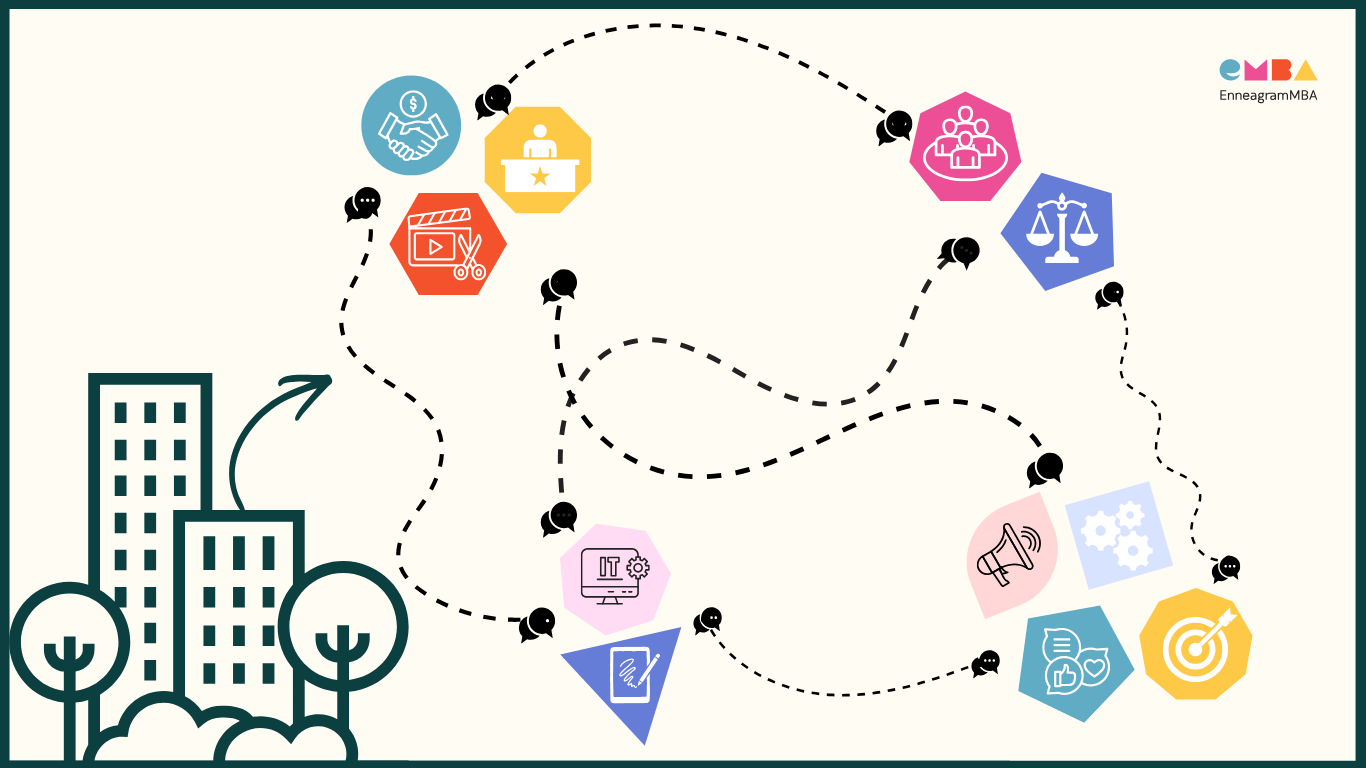
Your Org Chart Shows Who Works Together. The Enneagram Can Help Show How.
An org chart can tell you who reports to whom.
It can show that Marketing works with Sales, that these eight people make up the leadership team, or that two departments need to collaborate on an upcoming initiative.
What it can't show you is how those relationships work.
How do these people communicate?
How do they interpret information?
How do they make decisions?
What happens when there's tension?
How do they influence one another?
What happens when the workload increases or a project goes off track?
Those are the workplace relationships underneath the org chart—and they're often where the real work of team development happens.
That's why our goal isn't simply to help more people know their Enneagram type.
It's to help organizations use that knowledge to better understand and shape the relationships that make the work happen.
So, How Do You Keep the Enneagram Alive After a Workshop?
Don't make the goal remembering the workshop.
Make the goal using what you learned.
Learn It. Understand the patterns and differences within your team.
Translate It. Explore what those differences mean for how you work together.
Build It. Create shared practices and agreements that help you work better with those differences.
Use It. Put those practices into action, revisit them, and adjust as your team evolves.
Learn It → Translate It → Build It → Use It.
Because knowing your Enneagram type isn't the finish line.
It's what changes because you know it that matters.
Bring the Enneagram to Your Team
Whether you're looking for a standalone team workshop, continued development and application after the workshop, or a way to build a common Enneagram language across multiple departments or locations, we can help you determine what makes sense for your organization.
You don't need to know which workshop or program you need before you reach out.
Tell us what's going on with your team, and we'll help you determine the right place to start.
Start Here -> https://www.enneagrammba.com/start-planning-your-enneagram-workshop
Looking for an Enneagram facilitator for your team?
If you're considering bringing the Enneagram into your workplace, start by telling us a little about what's going on with your team. We'll help you think through what kind of experience might make the most sense, whether that's a standalone workshop, continued team development, or something across multiple teams or departments.